Violence has existed since the beginning of time, it is the founding base and building blocks of human civilization. Violence is what has expanded the societies and still keeps social order to this day, however, many people argue that is ironic, and wrong, that violence isn't the answer to finding peace. In the movie
The War, it tells the story of life affected by violence through the eyes of a 12 year old girl, and how although it may be an imperfect society, although people may try to justify acts of violence and defend it with honor, she learns that violence is not, is never the solution.
Violence exists in many varies forms, one of the more intense forms being war itself; one cannot fully recover from war, the acts of violence and experiencing life and death with stay with one forever. The father in
The War is a veteran from the Vietnam War, and although he is safely returned to his family, his gruesome experiences during the war changed him. In one of the early scenes of the movie, the younger brother of the family, Stu, runs to wake his father up for breakfast in excitement; but gets pinned down in a fatal position by his father due to an episode of PTS. As the father, Stephen wakes up to his son, he also hears sounds of helicopter blades, loud and clear, instantly taking him back to the war and he pins down the first thing that touches him as an instinctive defense mechanism, which is his son in this case; showing that even though he is consciously aware he is home, surrounded by people who loves him dearly, and does not need to be on guard, ready to take out the enemy at any moment anymore, he still can't live a normal life because what he'd seen and felt during the war makes him a new person, it traumatized him forever. Stephen tries hard to suppress his PTS episodes and does a fairly job doing so, however it planted a button in him that cannot be pushed, and more than often, those buttons are in defending the ones he love rather than himself. "I don't mind so much you plowing into my car and I don't take offense at you calling me names. But you go after my child, you're going to push a button on me and then I'm going to lose control and kill you. Now apologize to my son." Stephens says this after Mr. Lipnicki tries to fight Stu, he did not care when Lipnicki purposely hit his car, nor when Lipnicki insulted him, but when Stu is close to harm, that button is pushed and he almost loses control, almost killing Lipnicki to defend his son. The war left him with the skills perfected to injure and kill, but also an injured soul, a time bomb ready to explode during the most expecting times, unable to live life in peace as he did before.
As a poor, or African-American, or veteran, or all of the above living in the 1970's, life was probably hell, however, that does not shape or change one's morals or basic rights as a human being. Stephen's family has been struggling just barely getting by since he's returned from war, the government does not offer any kind of help and the social norms keeps him from holding a job for more than a month, but he still tries to be hopeful, making sure he is giving his all for his family. In a conversation Stephen has with his wife, he expresses how he wants to make a difference in this world, and that is making sure his kids believe in miracles, that anything is possible and they don't need violence to achieve it. He understand the struggles his family is going through, they eat potatoes everyday of every meal because it's cheap, and often his kids gets into physical fights because it's the only way they know how to defend themselves; but that does not change the fact they are good, honorable people, and in having his kids understand consequences and believe in themselves, his duty as a father is fulfilled. Lidia, the older sister of the family has two African American friends, she understands equality, that people are the same no matter the skin color, socioeconomic class, or gender. "My mama said I don't hafta hang out with nobody who degrades me that-a-way, even if they is my best girl." Elvadine says this to defend herself in a conversation with Lidia, also her best friend, when Lidia says the N-word in a way she meant no offense or harm. She only said it because she hears Elvadine saying it, but that does not make it ok and Elvadine understands that, she knows to stand up for herself and draw the line for what is and isn't appropriate in a non-violent way, she understands her self worth and respect isn't worth less simply because she has a different skin color. Morals and integrity is something good people share, and good is not defined by how well one can fight, how much money one has or their skin color, but by the way they treat others with the respect they have for themselves
One thing more powerful than violence is love, it is what keeps families together and happy, keeps societies and cultures united, and keep faith in a world so full of violence. Love is more powerful than hatred and violence, that's what Stephen has been teaching his children after he came back from war, he wants nothing more for them to understand that because it is what he learned the hard way through the horrifying experiences of war himself. After he tackles Mr.Lipnicki to protect Stu, he gives the cotton candy meant for his wife and daughter to the Lipnicki children, and when Stu questions him about it, he simply answers "because they look like they haven't been given anything for a long time." He knows the Lipnicki children has it hard too, raised in a junkyard without a mother by a father who only knows how to resolve problems with his fists; he knows the violence is only there because of the absence of love and that even if he presents them with only the slightest act of love, it makes a difference. Violence is such a controversial and self-conflicting topic itself, but Stephen nevertheless tries to help his children understand it in the most peaceful way. "I can't tell you never to fight, Stu. But if you want to know what I think, I think the only thing that keeps people truly safe and happy is love. I think that's where men get their courage. That's where countries get their strength. That's where God grants us our miracles. And in the absence of love, Stuart, there is nothing, nothing in this world worth fighting for." This is one of the many times Stephen talks about fighting with Stu, one time he just straight up says "I leave you for two seconds and you're already fighting?" when Stu gets in a fight with a kids who called him names. Stephen always talks to Stu about his understanding of fighting, he is a trained fighter, but the skills are not what defines a fighter, but the values he holds to understand fighting will not and cannot solve all the problems in life. Through his experience in the war, he knows that violence is inevitable, unfortunately it is always going to be a problem all around the world, however love is the more powerful and more universal part of society than violence and war, it unites people and creates a feeling that overpowers even the most gruesome of violence.
Life lessons are learned through experience, taught by the people closest to one, and more often through pain and suffering. After Stephen passes away from saving a co-worker, Stu becomes angry and projects his anger and helplessness into violence, even though he knew it's something his father would frown upon. Stu turns to violence to get back the tree house he built overtaken by the Lipnicki children, Lidia at first hesitates about the decision and thought about all the things their father has taught them but Stu is driven by so much anger toward God for taking his father, he does not care. An eye for an eye the whole world turns blind, the Lipnicki children strike back with even more violent acts causing the the tree house to be totally destroyed and burned. This again proves Stephen right, that nothing good ever comes out of violence, in fighting for the tree house, they've lost the tree house completely. Things change when the youngest Lipnicki chil, Billy goes to the top of the dangerous water tower to retrieve the key that belonged to Stephen, Billy falls through the roof of the water tower and everyone drops their differences and fighting to work together and save Billy. "If dad's watching... he can go now." Stu says this to his sister after Billy is saved from the giant draining water tower, the scene has multiple bird-eye view shots, watching the children from above, like God/Stephen watching them from above. The scene is also full of chaos, loud sounds, wet and dark; however there are also streaks of lights filtering through the roof of the water tower, suggesting that there is still light and hope in spite of the the darkness and foreshadowing that Billy pulls through and lives. In helping another and saving their life, Stu finally learns the lesson his father gave his life trying to prove, to be a decent person, to love rather than hate and that is the most important thing in life.
Violence is something that feeds on hatred in the absence of love, sometimes violence cannot be avoided in order to defend and protect the people one loves but it is nothing worth fighting for without love. Stu and Lidia learns that lesson through having their father returned from war and losing him within the same summer. Through their father suffering during and after the war, and their suffering from losing him and almost losing Billy, they learn that, violence is never the solution.


 v.s
v.s 
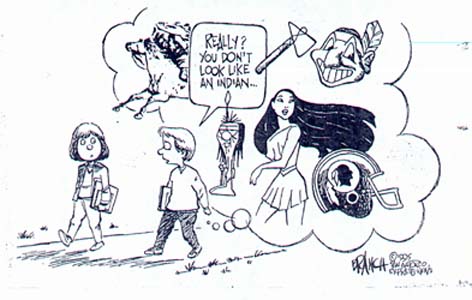
 be understood and connect through a couple of movies. The whole idea of the camp is intended to educate and honor the native culture with the young generation, but because of the lack of real understanding of the culture, it's only teaching a false stereotypes and ignorance. It really isn't a native camp at all, just a group of ignorant people using native culture to justify their acts of savagery and violence. The problem with the native fetish is that although it often begins with good intentions of outsiders getting to know a different culture, it always results in the ignorance that people think they understand it based off of one perspective and they believe that that's all there is to that culture.
 Since the beginning of films, native people have been portrayed through many different lenses, whether it's the savage Indian, the groovy Indian, the mean Indian, or the cool Indian. They all had one thing in common, they were all told in the idea of portray the Indian, overlooking the realness of these people. In the film Flags of Our Fathers, actor Adam Beach played a young solider turning to alcohol to face his fears of leaving his family behind to go to war, his character finally puts a face on the stereotype of a drunken Indian. Adam Beach himself described his character as, "shredding human emotion, no stereotypes, no Indians, just a young boy that wants to see his mom."(Reel Injun) This film finally shined light to address issues that exist in every group of people rather than just Indians. It recognizes the humanity life, that everyone is human with raw human emotions, and that the young boy drank because that's how people deal with the pain of being separated from his family in order to fight for his country, not because he was Indian. In 2001, a film called Atarjuat, otherwise known as The Fast Runner was released. It tells the tales of an ancient story passed down in the native tribe generation by generation, captured and documented with film, preserving the vanishing culture. What set's this film apart from the previous native films is that it's the first film to tell a story from the native perspective, not trying to prove anything to the rest of the world. Zachary Kunak said, "It's just culture, storytelling in it's purest form possible, capturing human experience in the rawest way."(Reel Injun) As a film maker, his intention was only to document a story passed down fro the grandparents of grandparents that's never been written down, to hold on to the stories that shaped the native culture. It tells the story without stereotypes, stripped of fancy plots and native "hype", not trying to present an argument. His targeted audience isn't particularly white people or native people, but people as a whole; everyone has stories that molded their culture, stories that give insight to who they are as human beings, Zachary simply told his through cinema. When dealing with unfamiliar things, people often are quick to jump to conclusions, putting a label on things they may or may or understand yet; that is exactly what happened with the native culture, jumping from one label to another. Fortunately, it's a time of change and real understanding, people are finding their voices to help the rest of the world understand better. Chris Eyre said," We're not asking to be noble, good, or righteous all the time. We're only asking to be human."(Reel Injun) Real, authentic native films are finally emerging, presenting to the rest of the world that they are only human, that just like everyone else, there's always the good, the bad and the evil. There is just no way of grouping an entire culture as a single label without misrepresentation and reducing the culture as a whole. It finally speaks out that native people are in fact, real people with real and raw human emotions. After 4000 films representing native people, there's finally progress being made. Native people are no longer only being misrepresented as one thing alone, they are seen as human beings, not a savage, not a warrior, especially not some sort of mythical creature, they are just human.